A Year in Review and Thanks to our Many Volunteers.
2025 has been, as always, an eventful year for the ranger team at Stanwick Lakes. We’ve given it our all to make the reserve the best it can be and have fun doing so. As a team, we have accomplished so much, and we’d like to share our highlights and setbacks with you all, to see behind the curtains at Stanwick Lakes.
Conservation
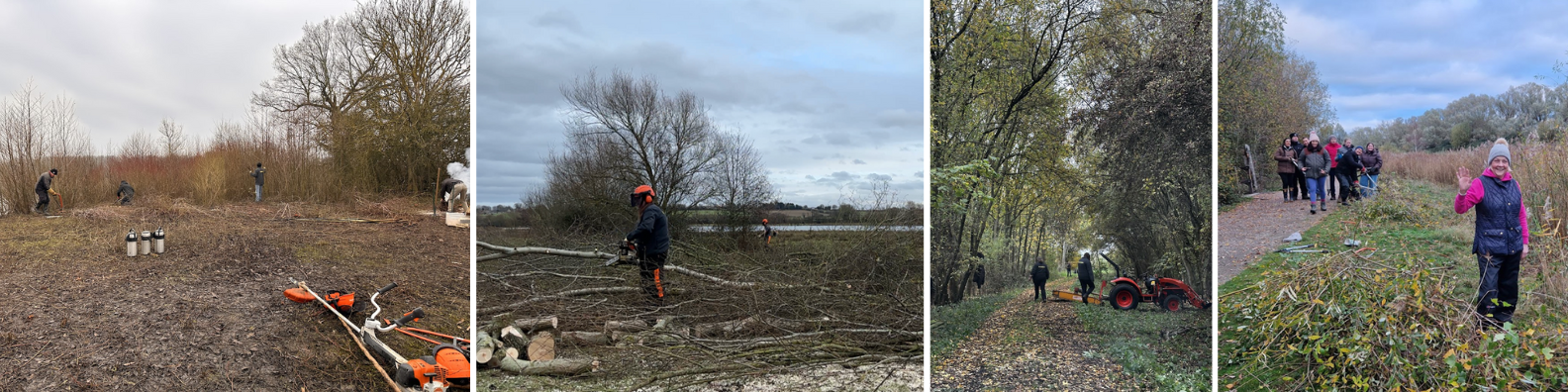
Conservation is of course at the heart of what we as rangers do. If we aren’t directly improving the site for wildlife, then we are working on something that will help provide funding to do so. Our conservation season lasts from September to March, as this is when we are least disruptive to our birds. On that note, most of the work we do is focused on our feathered friends which usually involves clearing vegetation. We’ve cleared lake edges of willow, which would otherwise cause succession, and invite egg-eating crows to have easy perching spots near wildfowl nests. Many corporate groups aided us in this endeavour, which was a huge help! We have done the same thing on one side of our 3-bridge causeway, which we do annually, changing sides each year to retain some of this habitat. We have cleared trees and scrub from many of our spits, making lovely flat, muddy areas for ground nesting birds and waders. Our talented tree-felling rangers, Luke and Michelle, did a marvellous job of tackling the gnarly willows which grow over the water. We have started a bigger clearance project in an area we are currently calling “Bob’s Marsh”. We hope to make this area hold water for as much of the year as possible, to create a wader haven. The first step of this is to remove the willow, bramble and reed that is choking up the water channels and make room for further works to be completed. This is a developing project, so we’re excited to progress this in the following year (or more likely, years) to come. Earlier in the year, we cleared Oak Island. This island, just beyond our round bird hide, holds one of the only truly old trees we have on site, a gorgeous, you guessed it, Oak! We cleared the small young trees, which were mostly blackthorn, to make an undisturbed area for our waterfowl. We saw the results almost immediately as many geese, snipe and oystercatchers started frequenting there. This is the driver behind everything we do, being able to know we have made a difference to our beautiful wildlife.
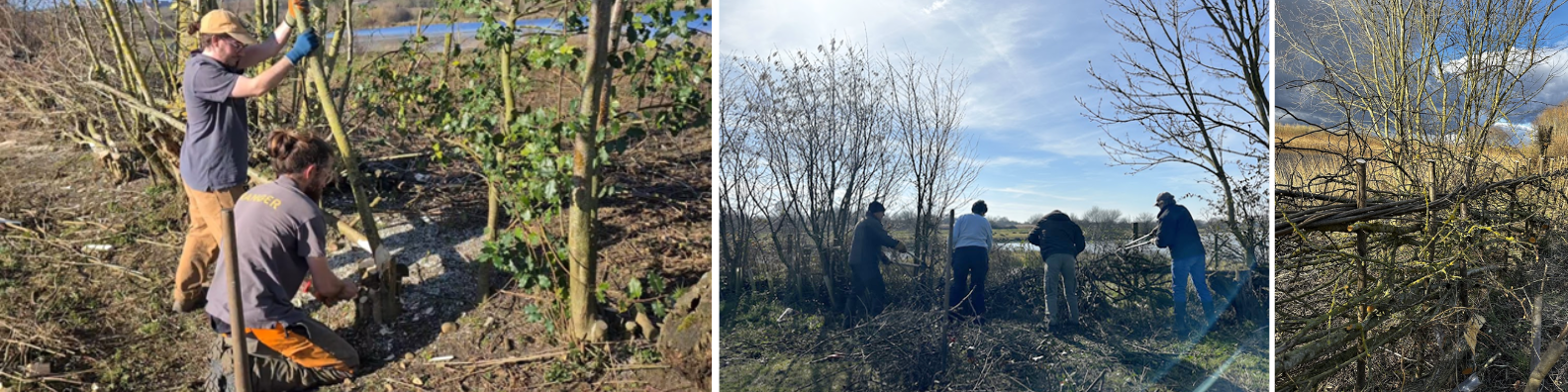
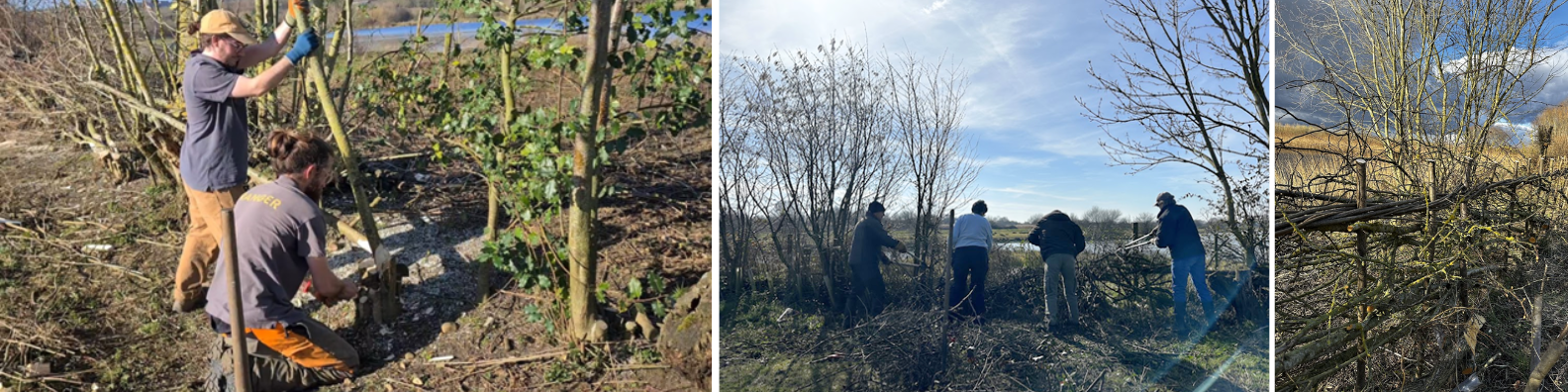
After our winter season ended, we did a good amount of hedgelaying. This is a practice we utilise around the site to create beautiful living fences from trees planted for this purpose years before. They create corridors for wildlife, keep native species whilst keeping visitors from straying too far from the path. We all find this a very satisfying process and enjoy teaching the method to any new volunteers.
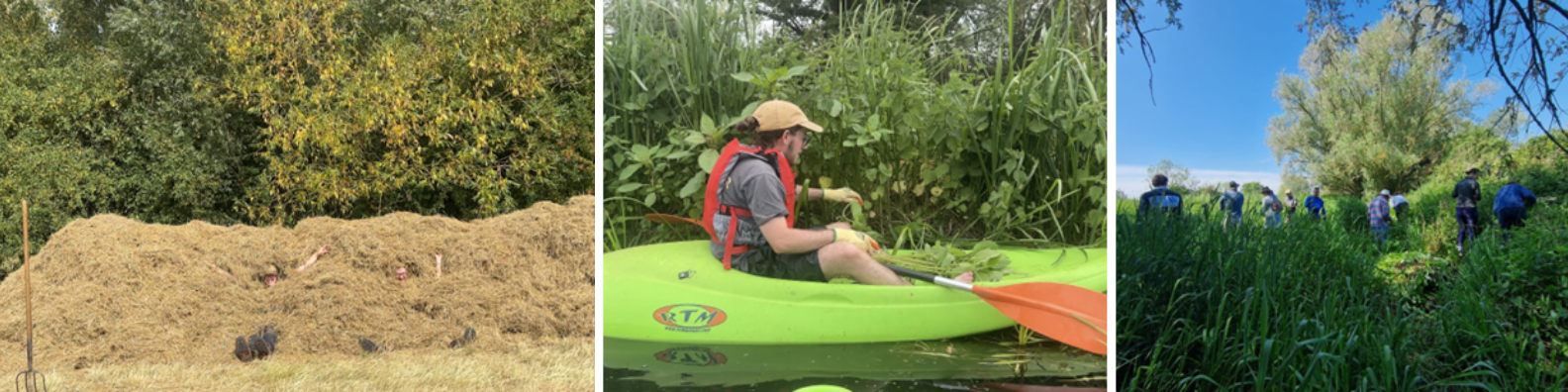
In the summer months, we have to be a lot more cautious in how we manage the site for conservation, as we cannot disturb nesting birds. Luckily, it coincides with when we are meant to do our wildflower meadow mowing. This year we mowed 2 areas, our zipline meadow, and a W shaped field which can be found by following our woodland trail. We do this to give the best chances for wildflowers to grow, as otherwise grasses dominate. We collect in the hay once it’s cut to prevent nutrients from entering the soil, as flowers grow best without them. The days spent there were in gorgeous sunshine but not an easy task for our hay fever suffering rangers! Another flower which needs management in the summer months is Himalayan Balsam. This invasive species is beautiful but unfortunately degrades our riverbanks with their weak root system and dominates riverside vegetation. To combat its spread, we pulled as many people as we could together in our Big Balsam Battle. Doing this job has its highs and lows. It’s hot, and full of stinging nettles. However, it is also a chance to work quietly right on the riverbanks, so you get to see beautiful nature, chat as you go and, once you get into it, it is really quite satisfying. This year we made a great dent into the balsam, but the amount of time and effort that went into it, and with other sites around us giving up, we are questioning whether to carry on. We hope to, as it is important, and we are a stubborn bunch, but we haven’t fully decided yet. Our final flower-focused job of the summer is to tackle ragwort in specific areas. Because some of our fields are grazed by cattle and horses, we make sure that we pull the ragwort, as it is harmful to them. However, we leave other areas alone as the Cinnabar moth lays its eggs on them, and we don’t want to negatively affect their population.
Usually, we would have done woodland thinning and reedbed clearance each year too. We plan to tackle the woodland in the new year, but the reedbed may have missed its window to be managed. As flooding becomes less predictable, and reed liking to be cut later into the year, we have struggled to hit the right balance. We have learned a valuable lesson though, which is that with our changing climate, we may have to adjust our practices slightly and cut the reedbed earlier than we would like to make sure we get it done before the floods come. Our other main setback this year has been a major robbery that took place as our conservation season started. This has been a huge blow to our works, as they stole our buggy meaning we can’t get to many parts of site, our chainsaws which are vital to the work we do, as well as our brush cutters which we use on almost every job we do, even if it is just to create access through the bramble to the work area. They took more than this, but these have seriously affected what we have managed to achieve this year. We have now replaced some of our tools, and kept ourselves busy regardless, finding other bits to be getting on with. We thank our volunteers; any donations made and offers to help us after this difficult time!
Outreach
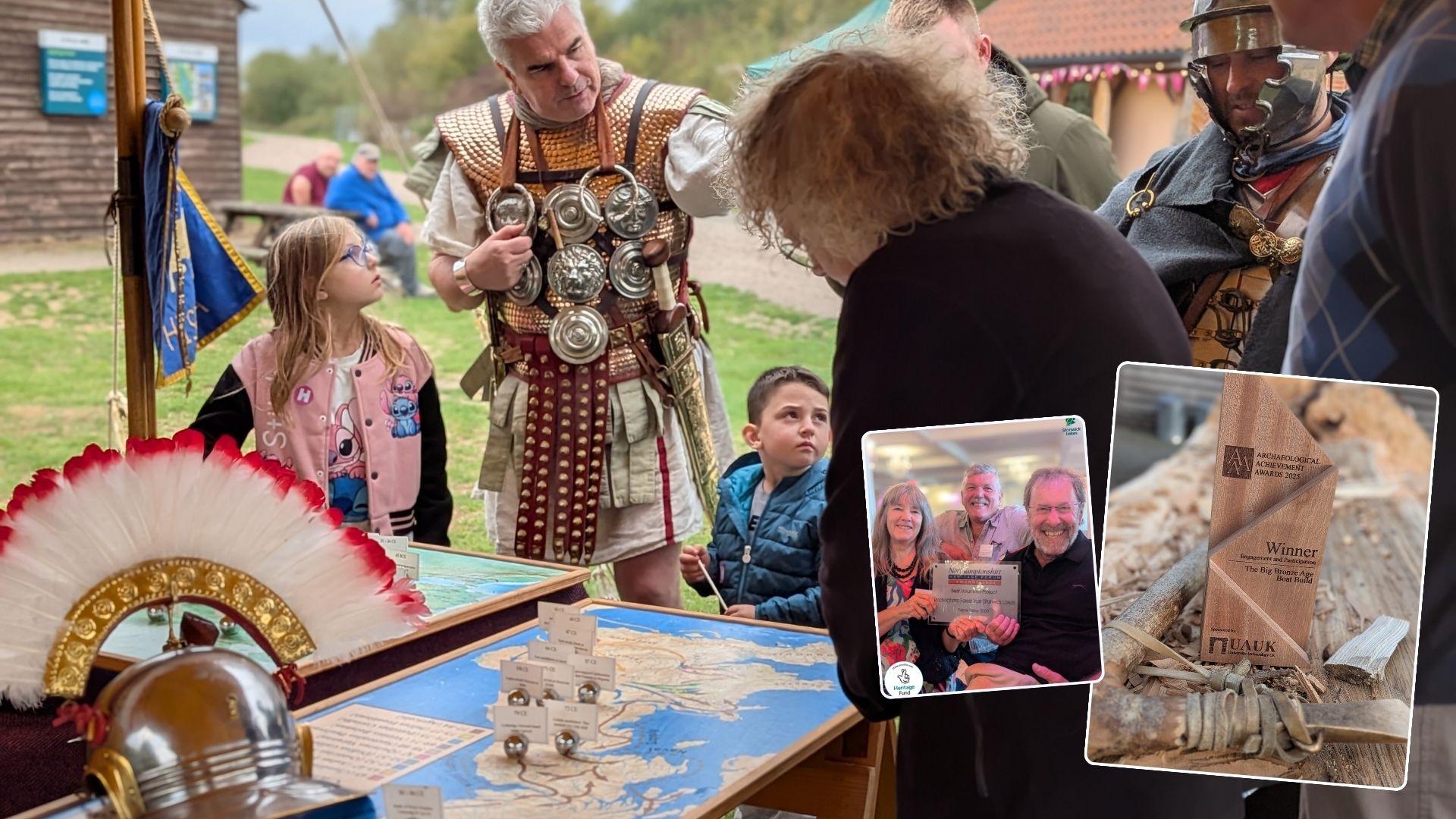
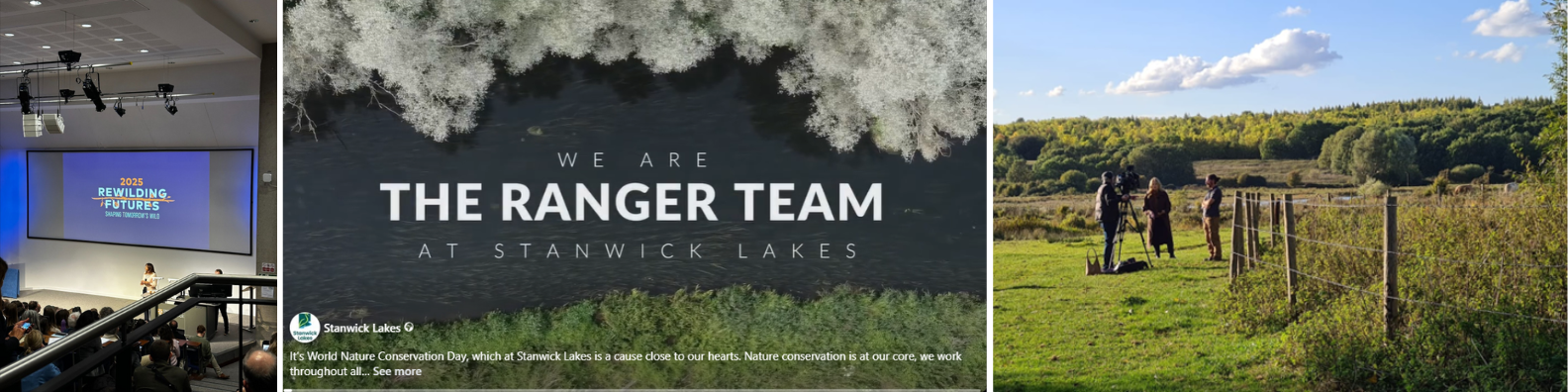
Throughout the year we have all engaged in many outreach experiences. Connecting people to nature, regardless of their background is extremely important to us. We have done heaps of education events, teaching the geology, history and ecology of Stanwick Lakes to school children. We have been creating weekly social media posts, to share with our visitors the work we do. To reach an even bigger audience, we created more videos than we ever have about the work we do and exciting projects we’ve been a part of. These were filmed and created by the ranger team and allowed us to utilise the many talents our ranger team holds. Though we prefer to be behind-the-scenes, we swapped the chainsaws for microphones and did in-person talks to the public and university students, which were well-received and hopefully will be continued in the future. It was good practice, as many of the ranger team were featured on various TV news segments this year, a first for some of us! It wasn’t all about us teaching others though, as we were able to go as a group to the Citizen Zoo Rewilding Conference in Cambridge to learn about all things rewilding. We learned so much and got to meet so many interesting people there. We also went on our annual ranger romp. This year we returned to Snettisham to see the spectacle of wintering tidal birds. We are always so grateful for these opportunities! Since autumn, we have been lucky enough to brush up on our mycology knowledge too, as we have had university student Tom doing his dissertation data collection here. He is an encyclopaedia of fungal knowledge, and we have been very lucky to have learned so much from him!
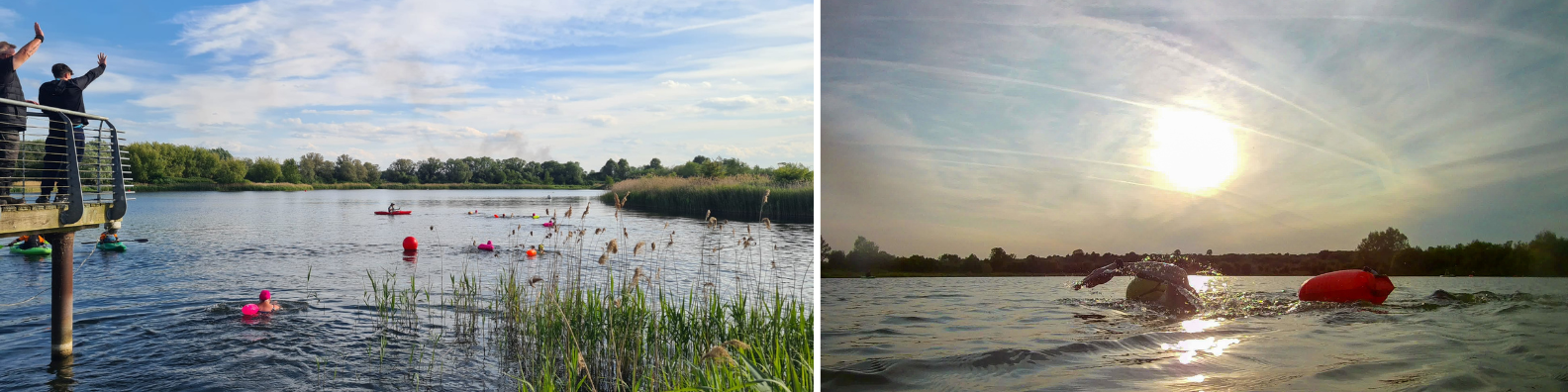
Because we don’t have enough to do, many of the team oversee various passion projects across site. Michelle manages our open water swimming sessions, allowing people to experience our site in a unique way. This is mindful exercise, allowing swimmers to be immersed in nature, meet new people and stay fit all at once! She has also been progressing an ongoing project of creating a dog walking field. As our site requires dogs to be on lead to protect our wildlife, she had the great idea of creating a space to allow dogs to run free! We have been trying to make a hireable, private space for this purpose, and hope to see this come into fruition soon!
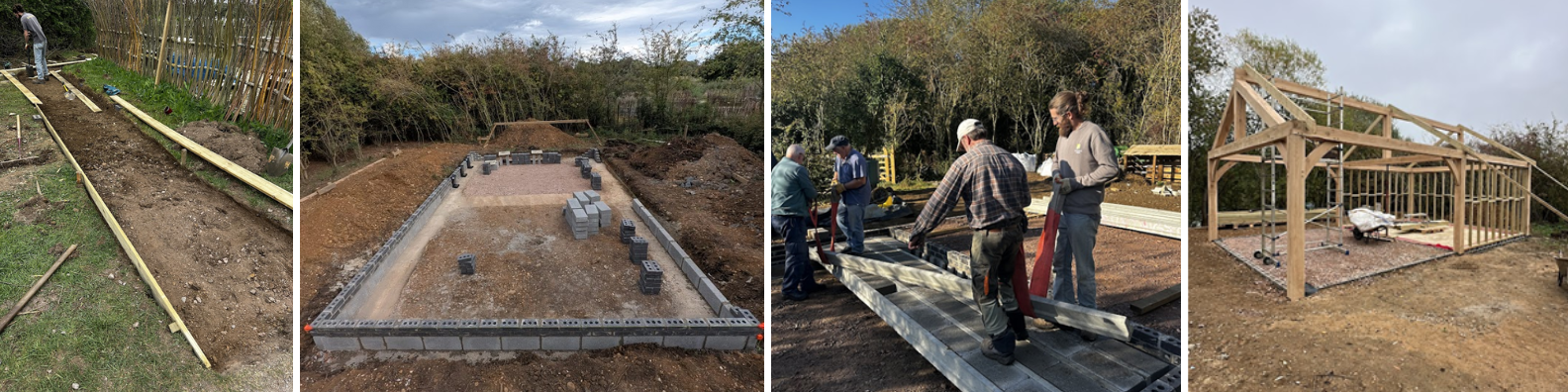
Luke has been hammering nails and puzzling over blueprints creating a beautiful woodland workshop. This idea was born from Luke wanting to utilise as much of the wood that we cut down here. It evolved from a charcoal kiln into the oak-framed shelter that is currently 75% complete just past the gardens. It will hold the kiln, craft courses and anything else we can think of to use our arisings for.
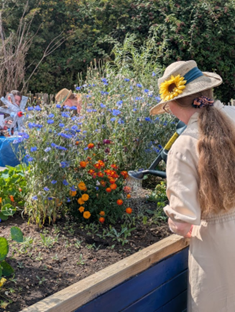
I (Isaac) have led our accessible gardening goup. A close-knit group of people who experience early-onset dementia have been coming together weekly to create this beautiful space. They enjoyed themselves greatly, as the routine and safety of the sessions allows them to be productive and social. Their families too have joined us, giving them much needed community.
Site Maintenance
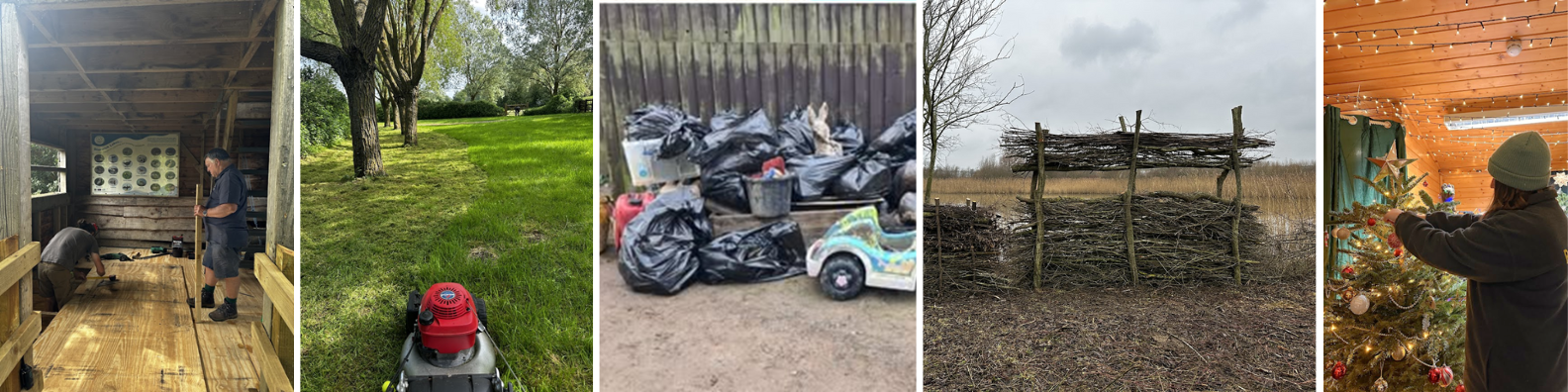
As rangers, we wear many hats, and that includes a hard hat! We all turn our hand to maintaining the site’s play equipment and visitor centre. On top of our usual odd jobs and fixes, we replaced several of our bird hide floors and ramps as the wood had come to the end of its natural life. We created bird viewing screens to give great views on our lakes that often have Egrets, Little Grebes and Pochards. We installed several memorial benches around site, a beautiful way to remember a loved one, whilst soaking in the sights and sounds of nature. The fencing along the entrance driveway had started to rot, so we enlisted the help of our grazier to replace that. We helped to get a very large kestrel puppet to hang from the roof in the visitor centre, Kassandra the Kestrel was a great feature but has now moved to a local school. We also had to deal with less wanted animals, as a colony of bees made their home right in the middle of march lane. Our local bee-keeping friend came to rehome them for us, and we got to learn a lot about bees! More relevant this time of year than any other, we also help with events on site. Christmas is a busy time for us, with lots of lights, trees and a grotto to build. We’ve supplied our wreath making courses with foliage and helped in any way we can to make Stanwick Lakes a festive wonderland.
Wildlife Monitoring
As wildlife enthusiasts, we try to see and learn about as much as we can here at Stanwick Lakes. In the spring, we set up bird nest boxes with cameras inside. Fortunately, a blue tit family made their home in it, and we got to see almost 10 young grow week by week and finally fly away. Now, when we see or hear a blue tit around, we like to think it’s “one of our ones”. Also captured on camera are a multitude of species that Michelle has managed to get. We’ve seen badgers emerging from their setts, foxes and otters lounging around on our pond dipping platforms and plenty of clips of our recently re-introduced water voles. Michelle often creates compilation videos and puts them on our YouTube channel. They are well worth a watch as you get to see what’s lurking in the brush when we’re not there. This year all of the rangers became lightly obsessed with moth trapping. None of us knew that we were going to love it so much, but we learned dozens of species and felt like little experts when we knew the species after one quick look. Moths are beautiful creatures and we feel lucky to work somewhere that allowed us to spend the first part of our day identifying them.
Wildlife Sightings
Through reports of regular bird watchers, and spending lots of time at the reserve, we get to see or hear so many amazing species. Birds that some people travel far and wide to see, show themselves to us so much we probably get slightly desensitised to them. “Saw another water rail today” is not something many people get to say. Every spring we hear so many cuckoo calls that we start hearing them in our dreams! Bullfinches, bearded tits and marsh harriers were spotted several times over the year. We got to hear the nightingale’s song again this year and believe there’s a chance they’ll breed here soon! Bitterns have been spotted many times and are staying around for longer. We confirmed our first sighting of breeding lapwing here, as although they come in great flocks (or deceits) over winter, we have never seen them breed here. Speaking of flocks, starling murmuration’s have just started to come into full swing and are my personal favourite thing to see on site. This time of year, with the sun setting behind them, it is truly something to behold. We had a good run of daily barn owl visits, that we all got to see, and we also got to see a long-eared bat together. It is a great thing to work somewhere where you are guaranteed a lovely wildlife encounter every single day.
Water Vole Reintroduction
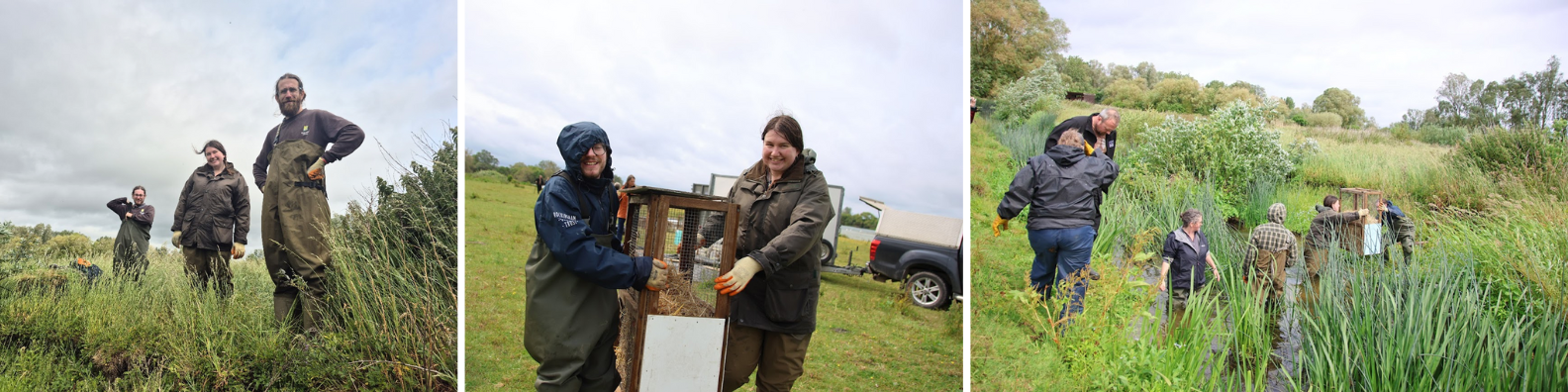
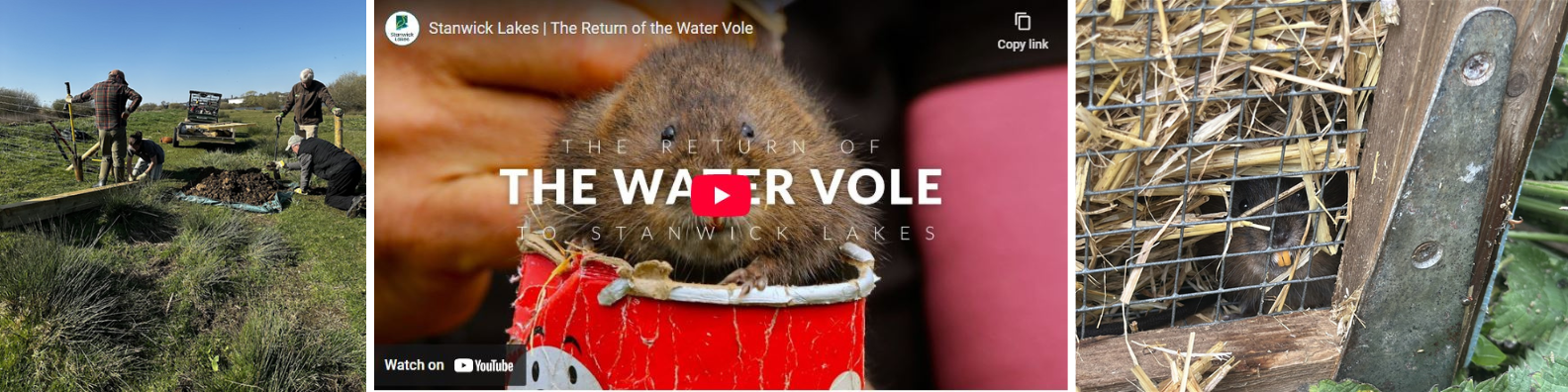
The biggest event in the calendar was our water vole re-introduction. Work for the release started years ago, and we spent lots of time this year preparing. We built fences, prepped volunteers, undertook training and managed our mink population to ensure our voles had the best chance. Working together as a team, with many volunteers and other Stanwick Lakes staff created such a fulfilling experience. We all got to see water voles up close, learn so much about them and end the experience knowing we made a difference. We all got soaking wet, wading through rivers and spending hours in the rain, but it was worth it to bring an endangered, important species to Stanwick Lakes.
Final words
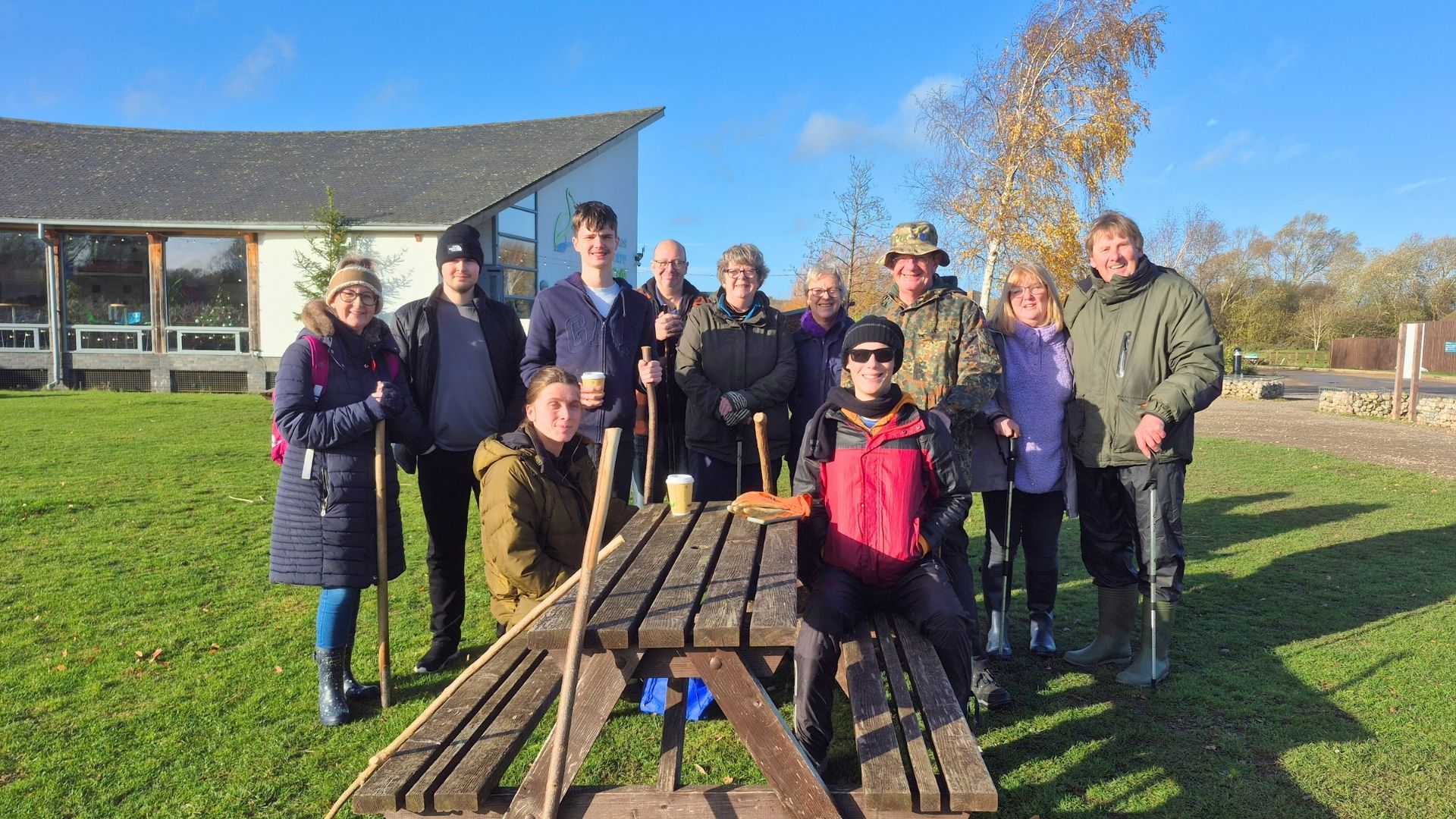
To end the year, we want to give a massive thank you to our volunteers, especially Bill and Colin, to the many corporate groups that came to help us, and to our visitors for making the work we do possible. We think that even with the major setbacks we’ve faced, we’ve pulled together and done an amazing job. We’ve had plenty of fun, seen so many amazing things and had far, far too many biscuits. Here’s to hoping next year is even better!