Over the past decade, Stanwick Lakes has worked hard to reveal the hidden heritage of our extraordinary site – bringing history to life through projects that have opened up the rich story of the valley and engaged both visitors and local communities.
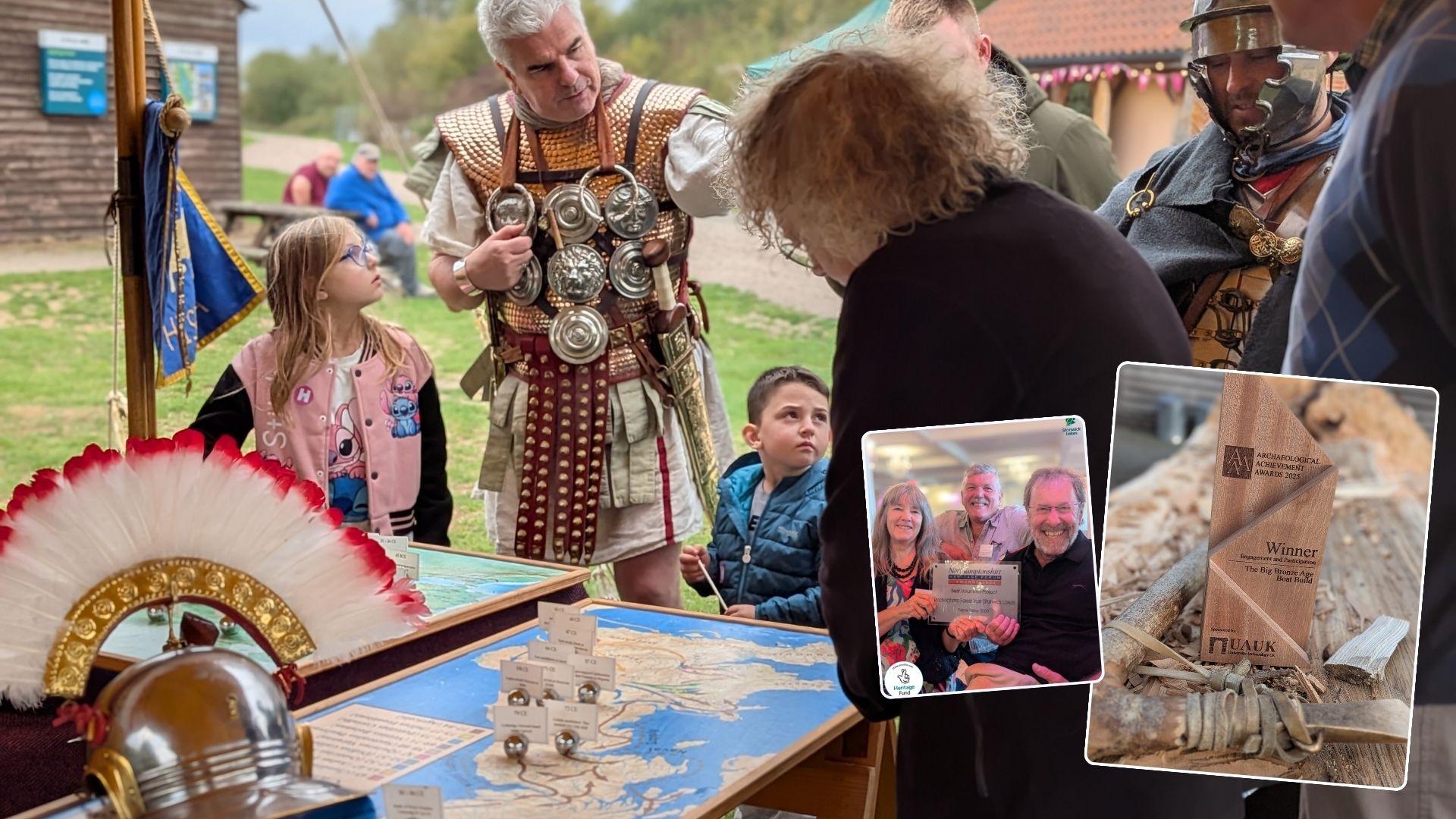
Most recently, our Bronze and Iron Age projects brought history vividly to life: restoring the Bronze Age Round Barrow, creating an Iron Age Settlement, exploring Iron Age textiles and completing the nationally recognised Big Bronze Age Boat Build, made possible due to the passion and commitment of our hardworking volunteers.
Building on that legacy, we are delighted to announce our next chapter: “From Iron to Empire”. Thanks to funding from The National Lottery Heritage Fund, this exciting project will explore the Roman era, using interactive projects across the site to uncover and share the stories of a changing landscape and the people who once called it home.
Huge additional thanks to our project partners – Udig, Operation Phoenix, Ancient Craft, and Northants Guild of Spinners, Weavers and Dyers – whose effort and support has made much of this possible.
What’s In Store
- Roman Pottery Kiln
We’ll be creating a replica kiln using natural materials from the site, inspired by Iron Age and Roman methods, offering us the chance to experiment with ancient techniques, understand trade and technology, and see how Romans shaped material culture. - Villa Viewpoint
The main Roman villa may no longer be visible above ground, but a new area overlooking the villa’s location will create a space of learning, providing a connection to the villa and helping us tell the story of its design. - Exploring Roman Textiles
The Spinners, Weavers and Dyers will be exploring Romano-British textiles, experimenting with dyes, fibres, and weaving to understand the culture and materials that would have been used and worn in Britain during the Roman era. - Roman Garden: Experimental Planting
Volunteers will research and grow plants used during the Iron Age and Roman periods, supporting our understanding of their cultural and practical uses within the historic landscape including food, medicinal and ritual. - Causeway Construction
Inspired by ancient wetland engineering – and with materials sourced sustainably from the site – we will build a causeway using a mix of traditional and modern techniques. This will open up previously less-accessible areas for wildlife, reflection, and learning.
Our Heritage Project Legacy
We will continue to maintain and protect our amazing heritage spaces for visitors, education and communities.
As part of this legacy, we are also excited to announce that we will be commencing the Big Bronze Age Boat Build 2!
Following the original project, this next build will see volunteers and specialists working together with Dr James Dilley (Ancient Craft) to carve a new log boat, using traditional Bronze Age tools and methods. Thanks to Boughton House Estate, a fresh lime tree log – grown in their historic avenues – will provide the raw material. It’s a wonderful chance to reconnect with ancient woodworking, to test skills, and to understand the heritage of the ancient waterways in our valley.
History Beneath Our Feet
You may walk the paths here, enjoy the scenery, or explore our trails without seeing much of what lies underneath – but Stanwick Lakes sits on a remarkable archaeological story. Excavations in the 1980s uncovered evidence of human settlement spanning over 5,000 years – Neolithic tools, Bronze Age round barrows, Iron Age settlements, a Roman villa, and more.
Our Heritage projects aim to tell that story of our hidden history through craft, reconstruction, learning, and community. We hope you’ll join us, whether as a volunteer, a visitor, or simply someone curious about the past.
We need You!
If you fancy trying something new, learning ancient crafts, or helping with planting or building, please get in touch! To find our more about volunteering, please visit our volunteering page:
Volunteering at Stanwick Lakes
And make sure to keep an eye on our “What’s On” pages for workshops, volunteering opportunities, and special events throughout the project.
Follow us on social media, sign up for our newsletter, or pop into the Visitor Centre to learn more.
We can’t wait to explore this Roman journey together.