The Unsung Heroes of Stanwick Lakes: The Hidden World of Fungi
This is a guest blog written by Tom Heddon, a student at the University of Northampton, who has been surveying areas at Stanwick Lakes as part of his dissertation research. We’re delighted to share his fascinating findings from the field.
Why Fungi Matter: More Than Just Mushrooms
Mushrooms are often the only signs we see of fungus in the wider world. But mushrooms are only the fruits of the fungi, and as the Apple tree provides far more for its ecosystem than apple production, so too does fungi! They play crucial ecological roles and are vitally important for the health of virtually all ecosystems worldwide. It is estimated that over 90% of all plants on Earth rely on fungal partners for optimal health and growth and, in addition, they play a key role in the breakdown of organic matter, creating new, nutrient-rich soil!
Woodland Fungi at Stanwick Lakes: Nature’s Recyclers
Stanwick Lakes has a myriad of differing habitats including grassland and woodland and within each habitat, we find specialised fungi to fit the roles needed. Woodlands are the home to diverse fungal communities including wood eating saprophytic fungi, which are responsible for the recycling of dead or dying wood, releasing nutrients back into the soil for the next generation of flora to use for growth, such as Turkey Tails (1), Velvet Shanks (2) Oysterlings (4), and the Leaf Parachute (5). Mycorrhizal fungi help nutrient uptake by tree or plant roots in return for energy produced by photosynthesis like the Elfin saddle (3).
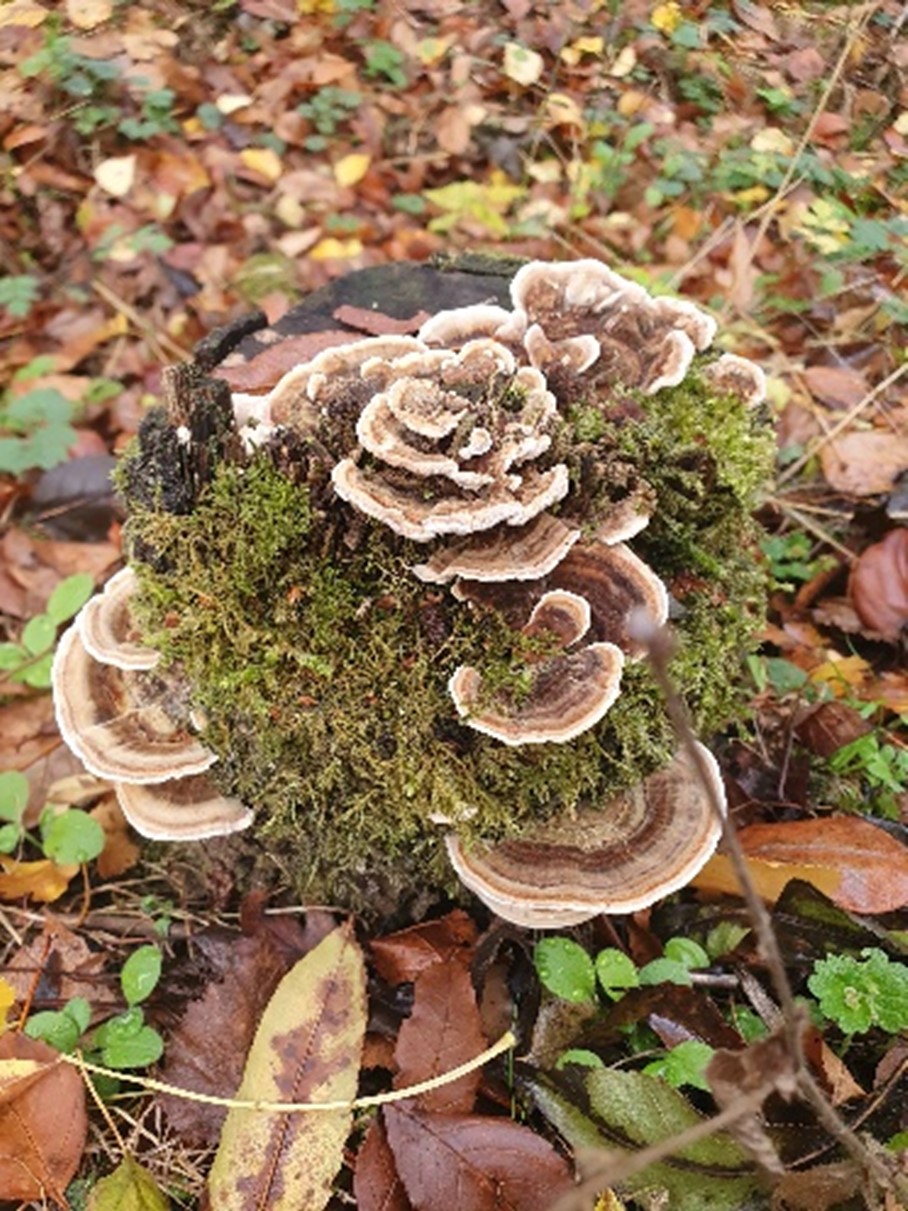
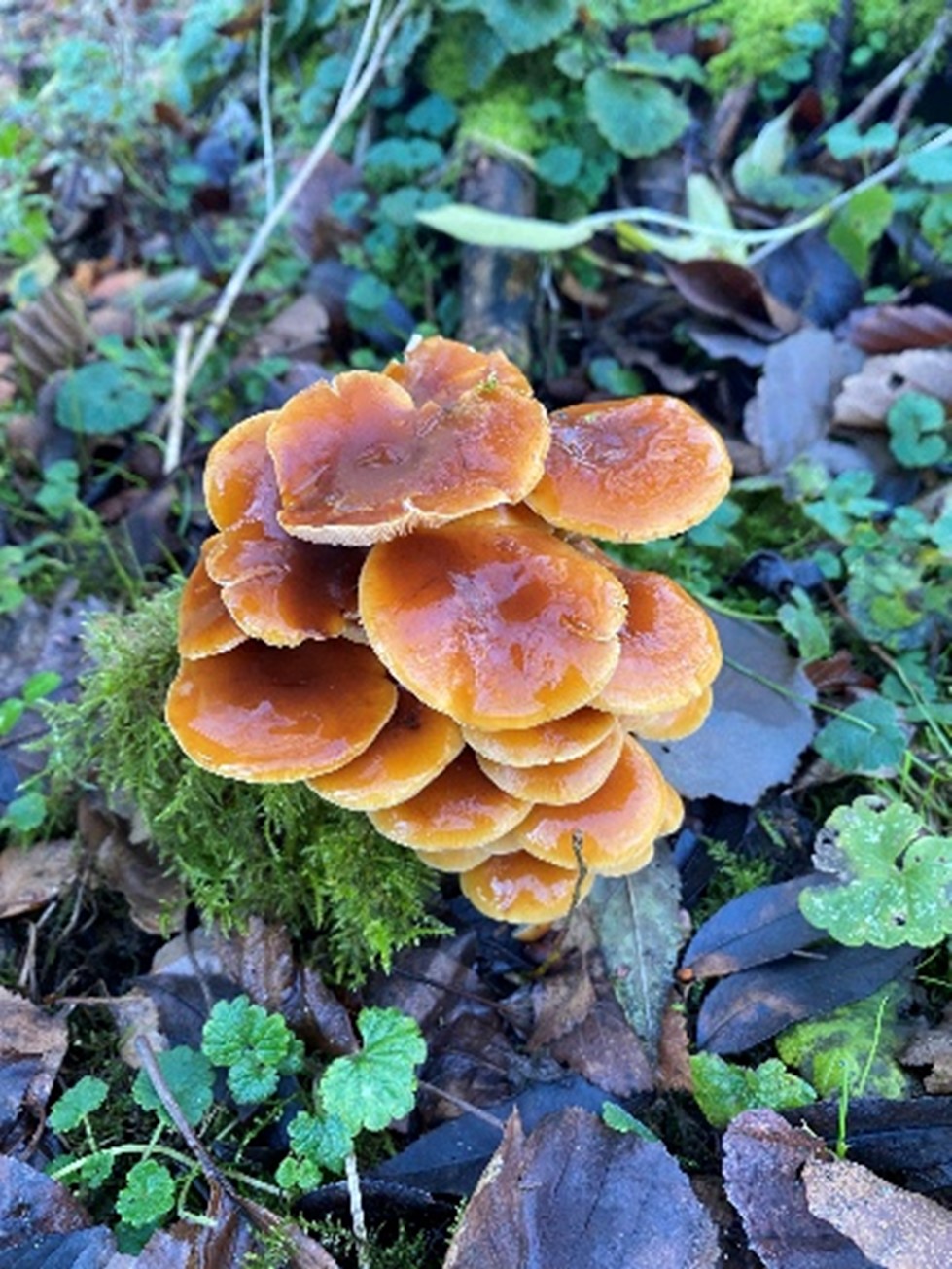
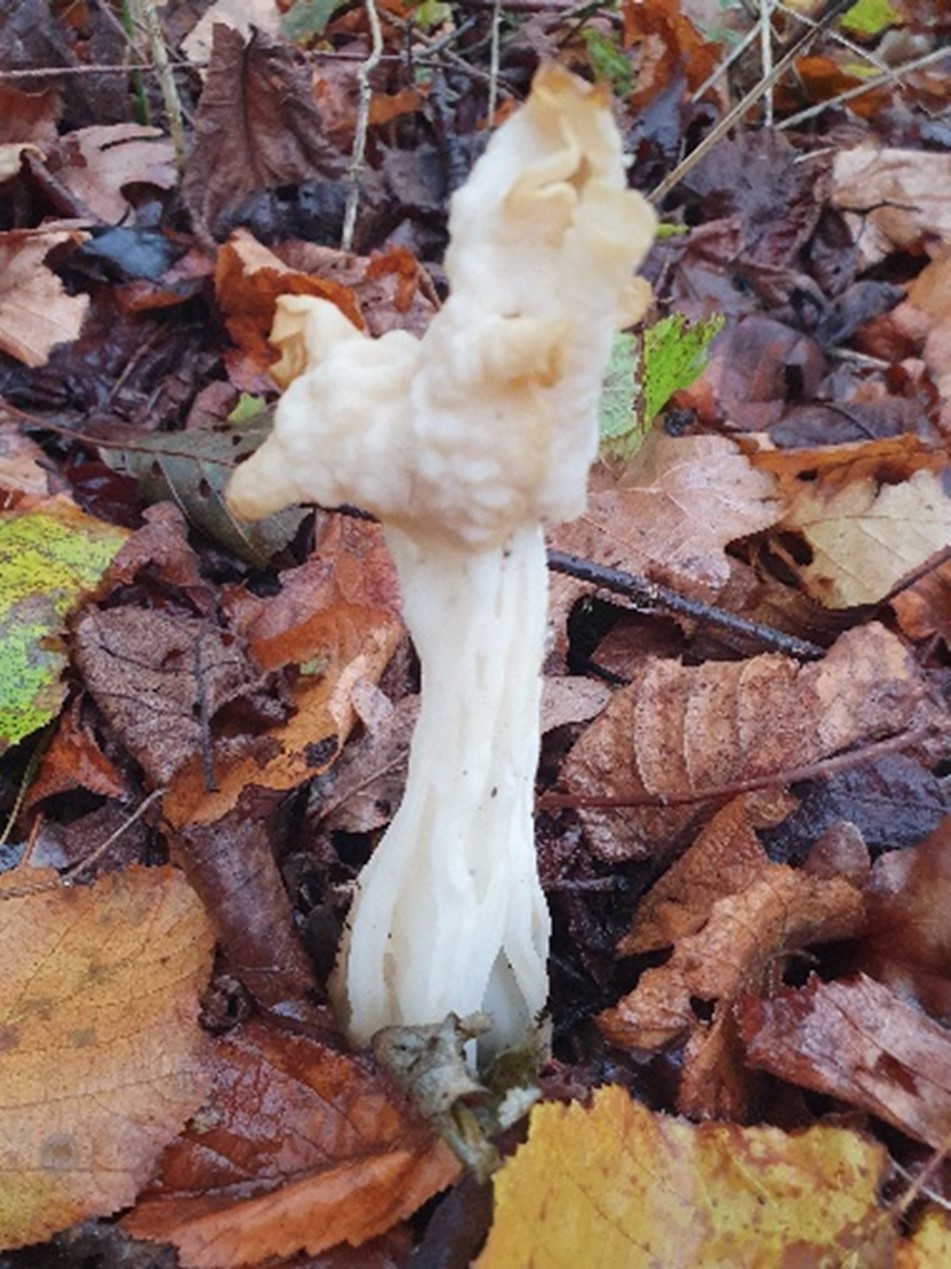
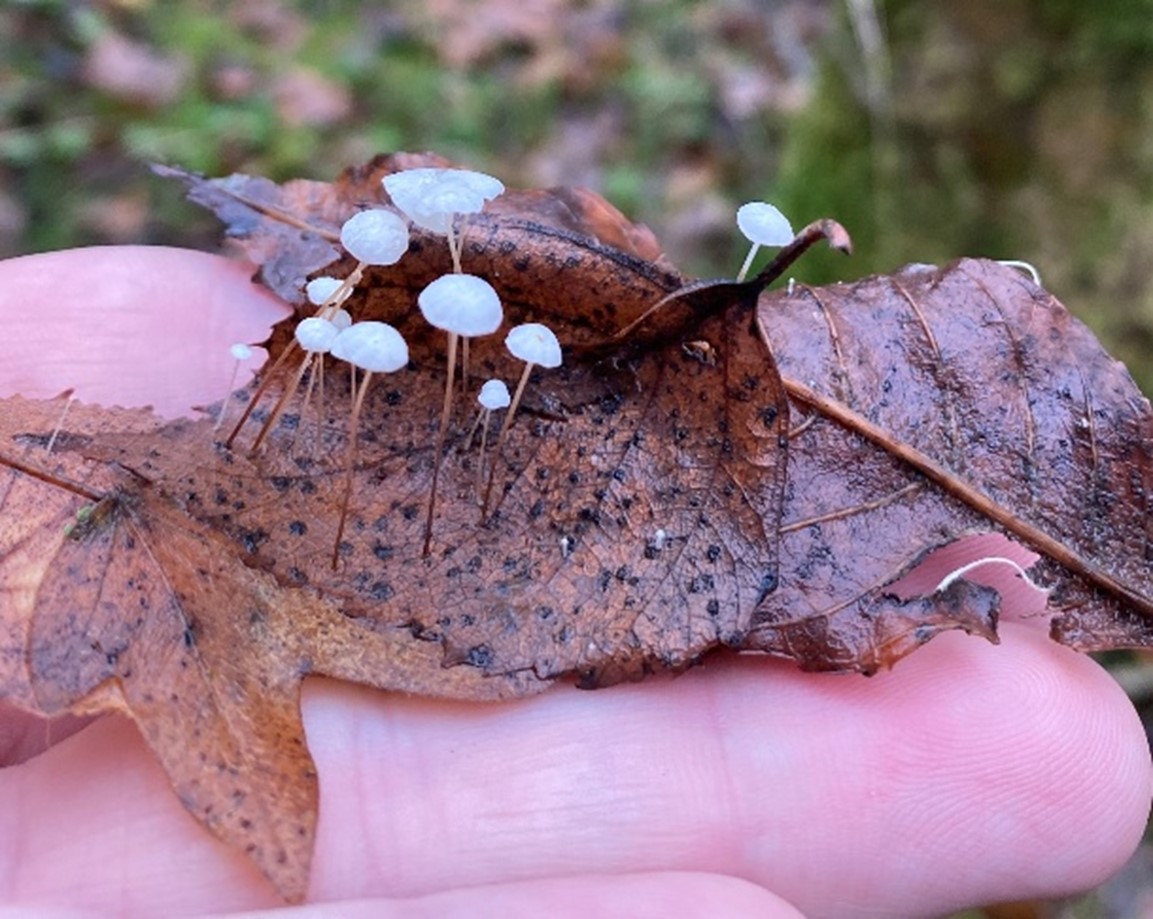
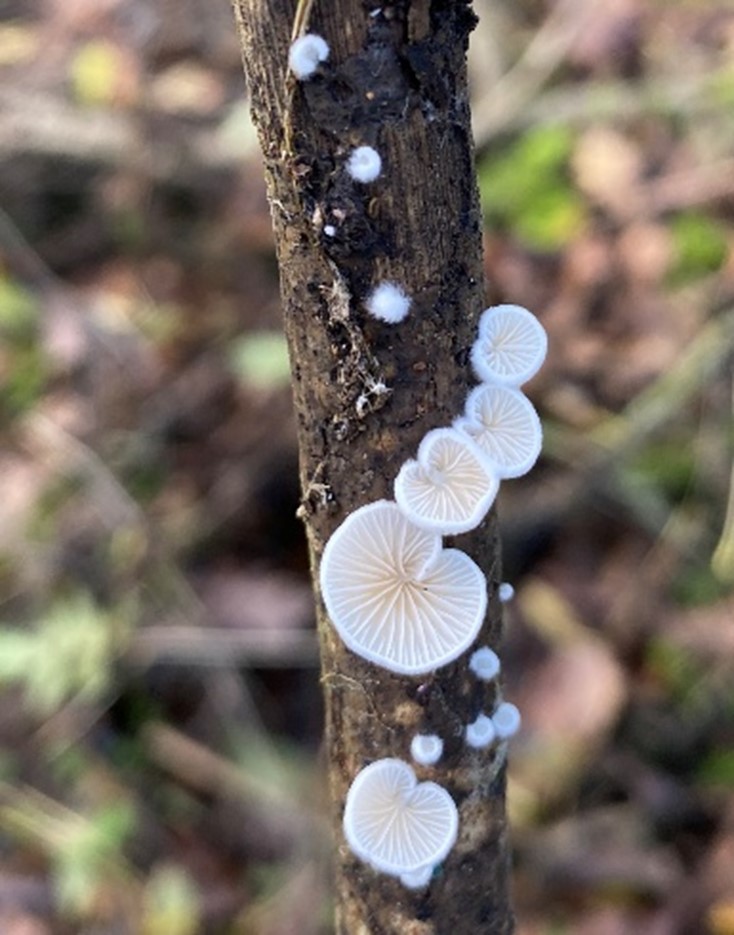
(1) Turkey Tail (Trametes versicolor), (2) Velvet Shanks (Flammulina velutipes), (3) Elfin Saddle (Helvella crispa)(4) Oysterling (Crepidotus variabilis), (5) Parachute (Marasmiellus ramealis)
Grassland Fungi: The Secret Supporters of Wildflower Meadows
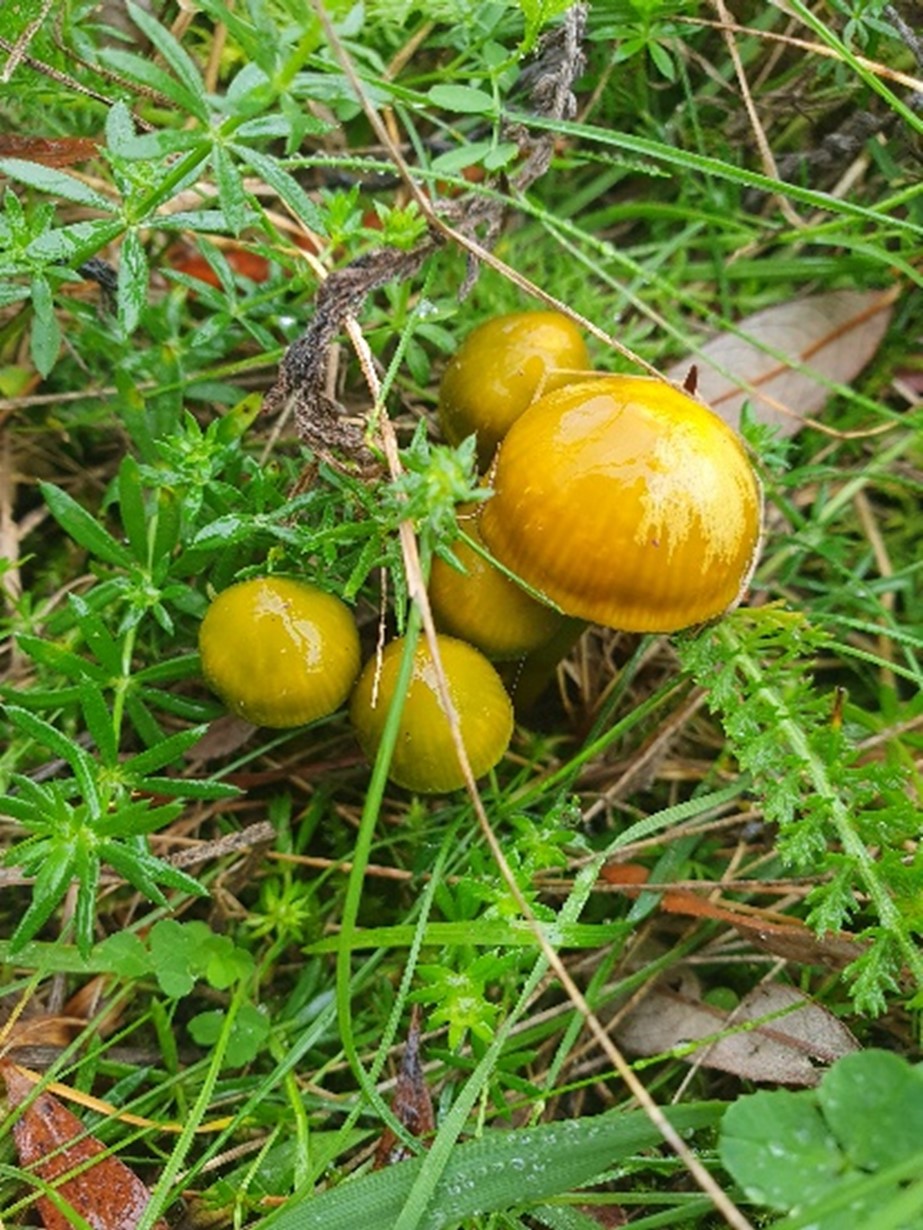
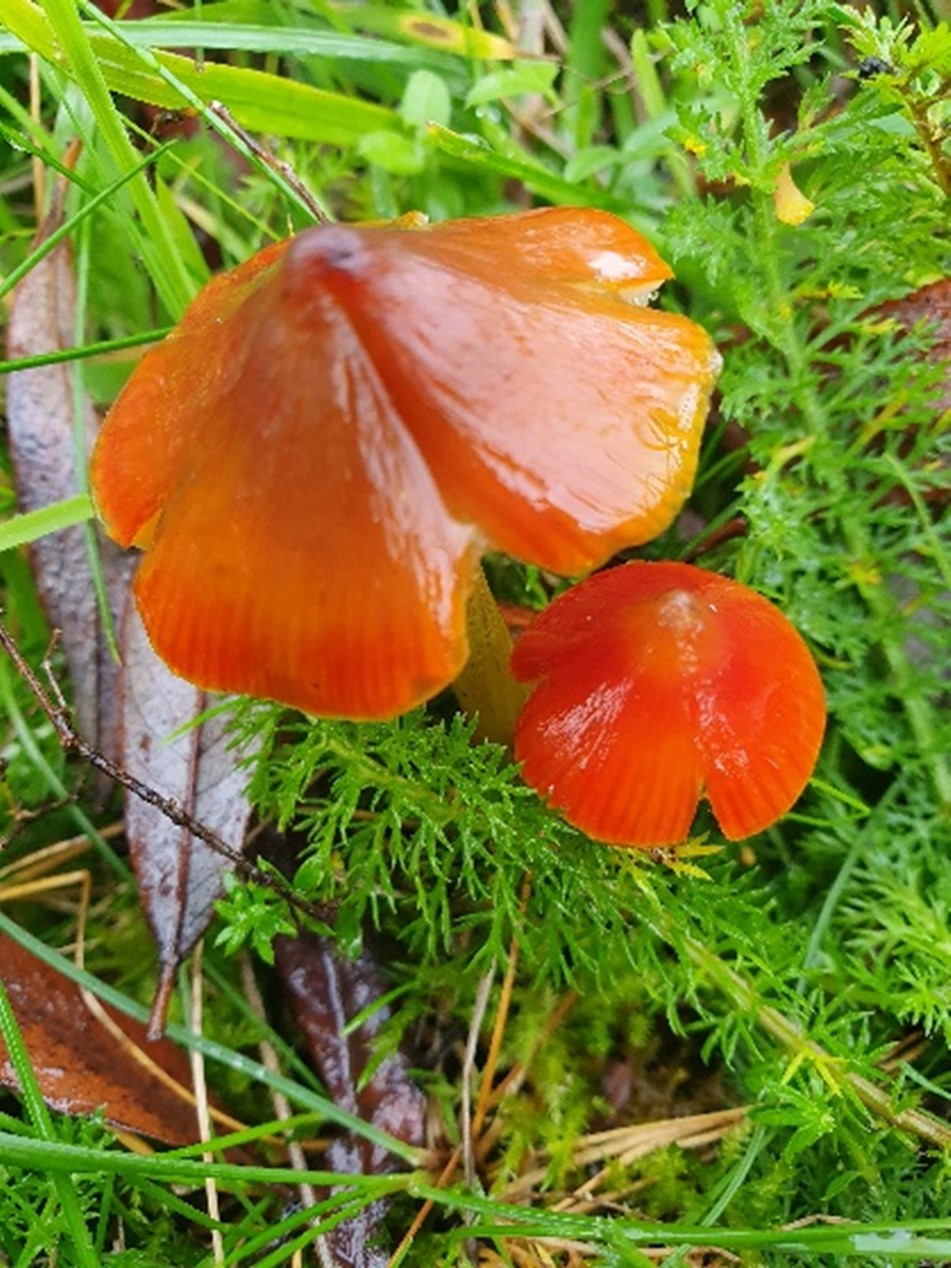
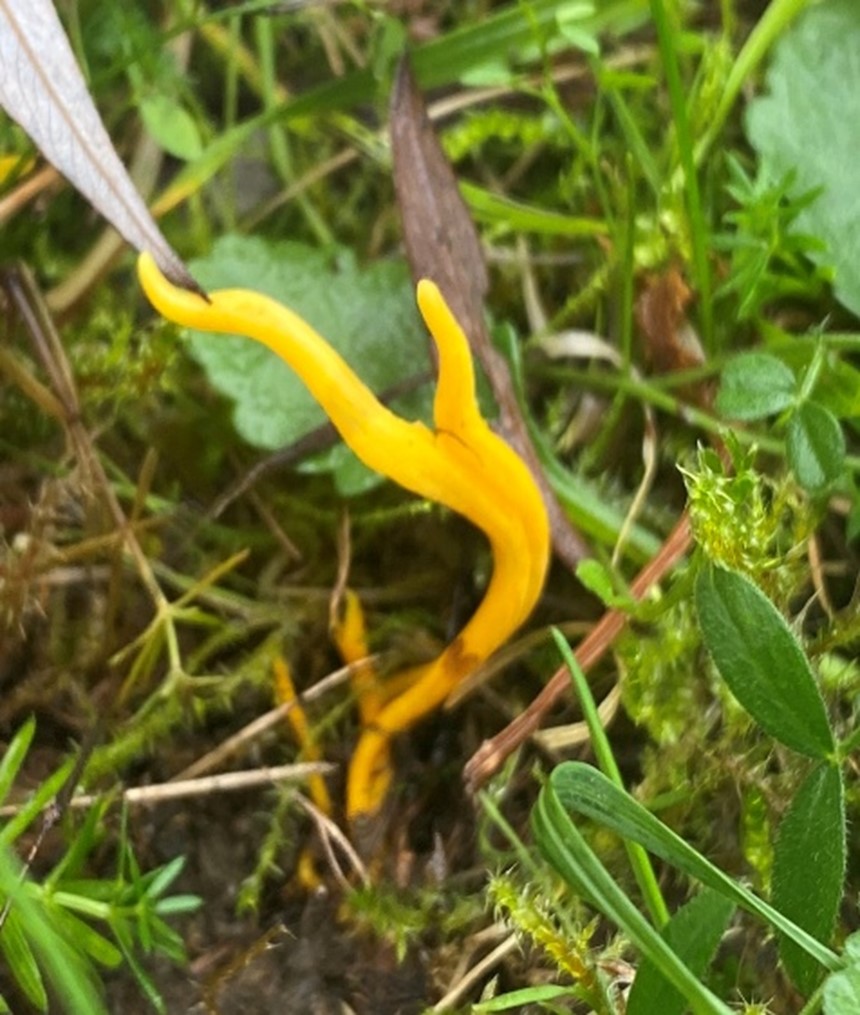
Stanwick’s grasslands are home to waxcaps with parrot (6), blackening (7) and yellow club (8) present. These share a mutualistic relationship with moss helping to supress dominating grass, allowing flowering plants to thrive and creating species rich habitats.
(6) Parrot waxcap (Gliophorus psittacinus), (7) Blackening waxcap (Hygrocybe conica), (8) Yellow Club (Clavulinopsis helvola)
A Rare Sighting: The Vulnerable Wrinkled Peach Fungus
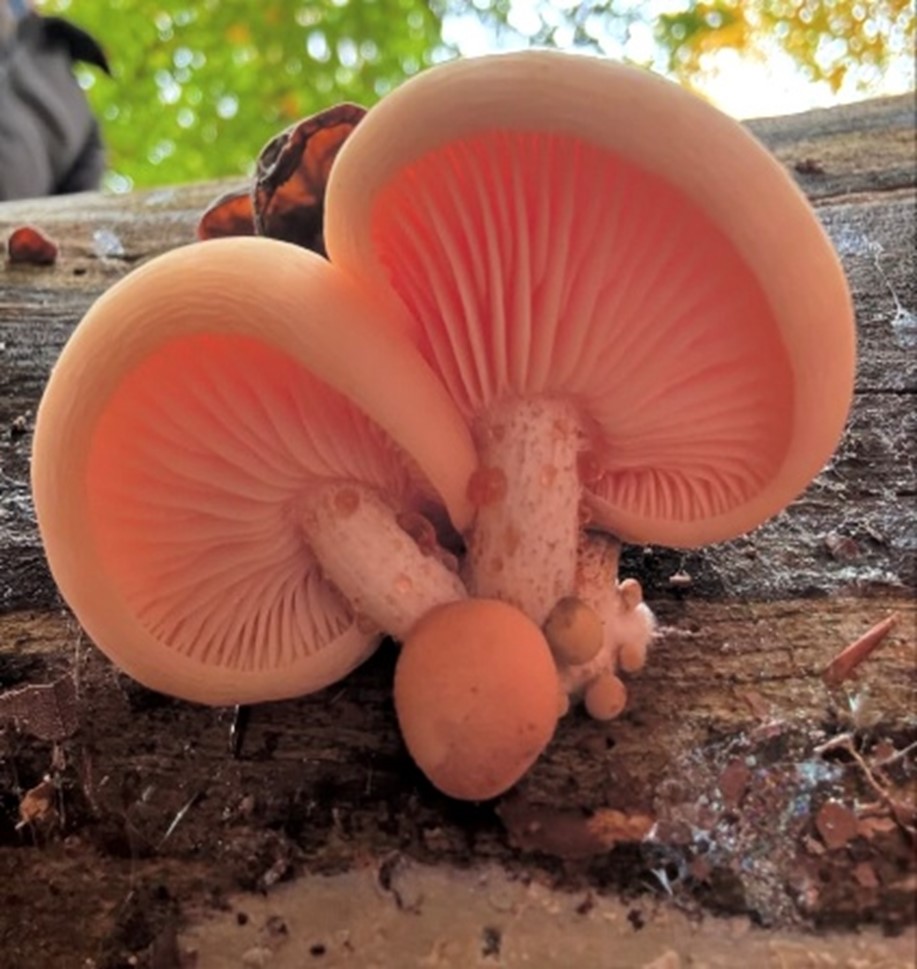
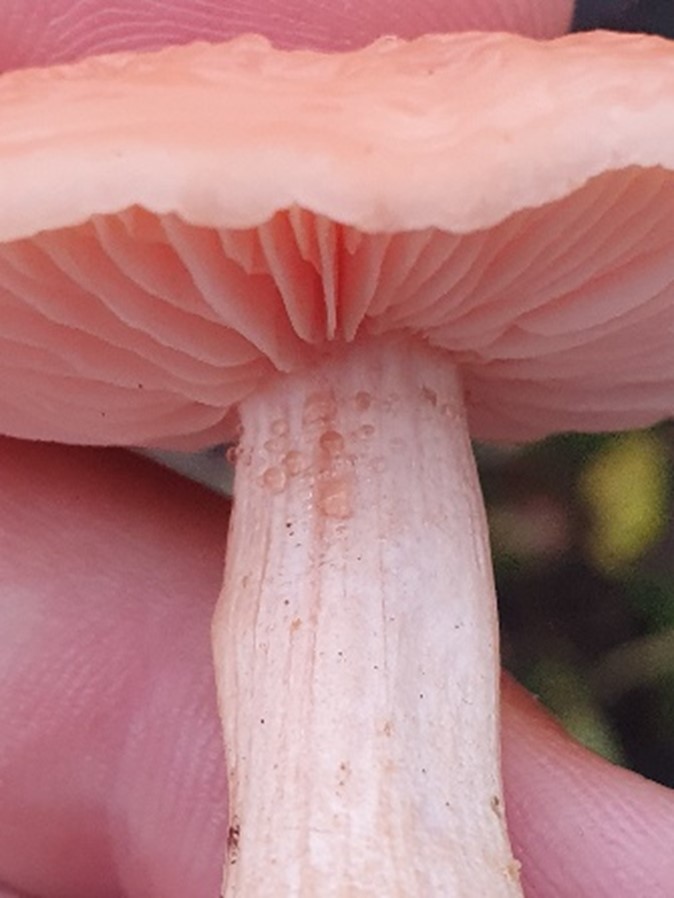
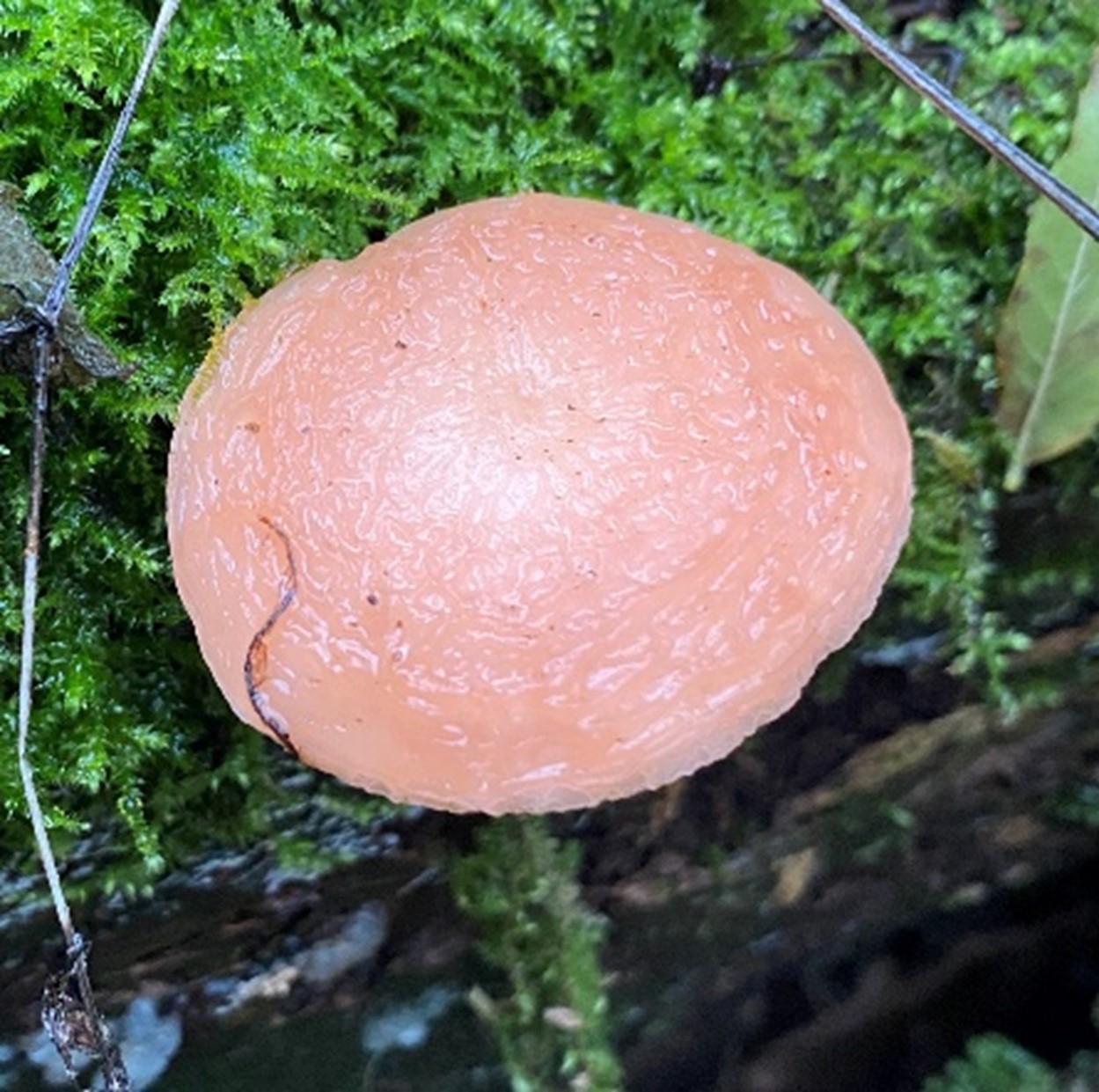
Rhodutus palmatus, the wrinkled peach fungus, is an IUCN Redlist species and is classified as vulnerable to extinction in Europe. It has seen the loss of its primary host, the Elm, due to Dutch Elm Disease arriving to Europe in the early 20th century, with estimates that 90% of English Elm could be lost. This vulnerable species has been seen at Stanwick Lakes where its conservation can be considered.
The discovery attracted significant media attention, with local and national journalists visiting Stanwick Lakes to cover the story. You can read more in the coverage below:
BBC News:
Rare fungus discovered at Stanwick Lakes
Northants Telegraph:
Rare vulnerable fungus discovered at Stanwick Lakes by environmental science student
A Rare Sighting: The Vulnerable Wrinkled Peach Fungus
Rhodutus palmatus, the wrinkled peach fungus, is an IUCN Redlist species and is classified as vulnerable to extinction in Europe. It has seen the loss of its primary host, the Elm, due to Dutch Elm Disease arriving to Europe in the early 20th century, with estimates that 90% of English Elm could be lost. This vulnerable species has been seen at Stanwick Lakes where its conservation can be considered.
The discovery attracted significant media attention, with local and national journalists visiting Stanwick Lakes to cover the story. You can read more in the coverage below:
BBC News: Rare fungus discovered at Stanwick Lakes
Northants Telegraph: Rare vulnerable fungus discovered at Stanwick Lakes by environmental science student
Stanwick Lakes: A Hub for Fungal Discovery
Whether you find them weird or wonderful, fungi may be the cornerstone of ecosystems across the planet making them the unsung heroes of the natural world. With fungal surveying continuing at Stanwick Lakes throughout the year, there is little doubt many other species are yet to be identified!
A huge thank you to Tom and the University of Northampton for their ongoing collaboration and for bringing such fascinating research to Stanwick Lakes. We look forward to seeing what further discoveries lie in store!