There’s been a real sense of sunshine and shovels across the site over the last few weeks – helped along nicely by some glorious weather and the return of that warm glowing orb in the sky!
It’s brought volunteers out in force, and what a difference a few weeks have made. Everywhere you look, something is taking shape, settling in, or being carefully (and sometimes messily) brought to life. Here’s a look at what’s been happening across the site…
Replica Roman Kiln
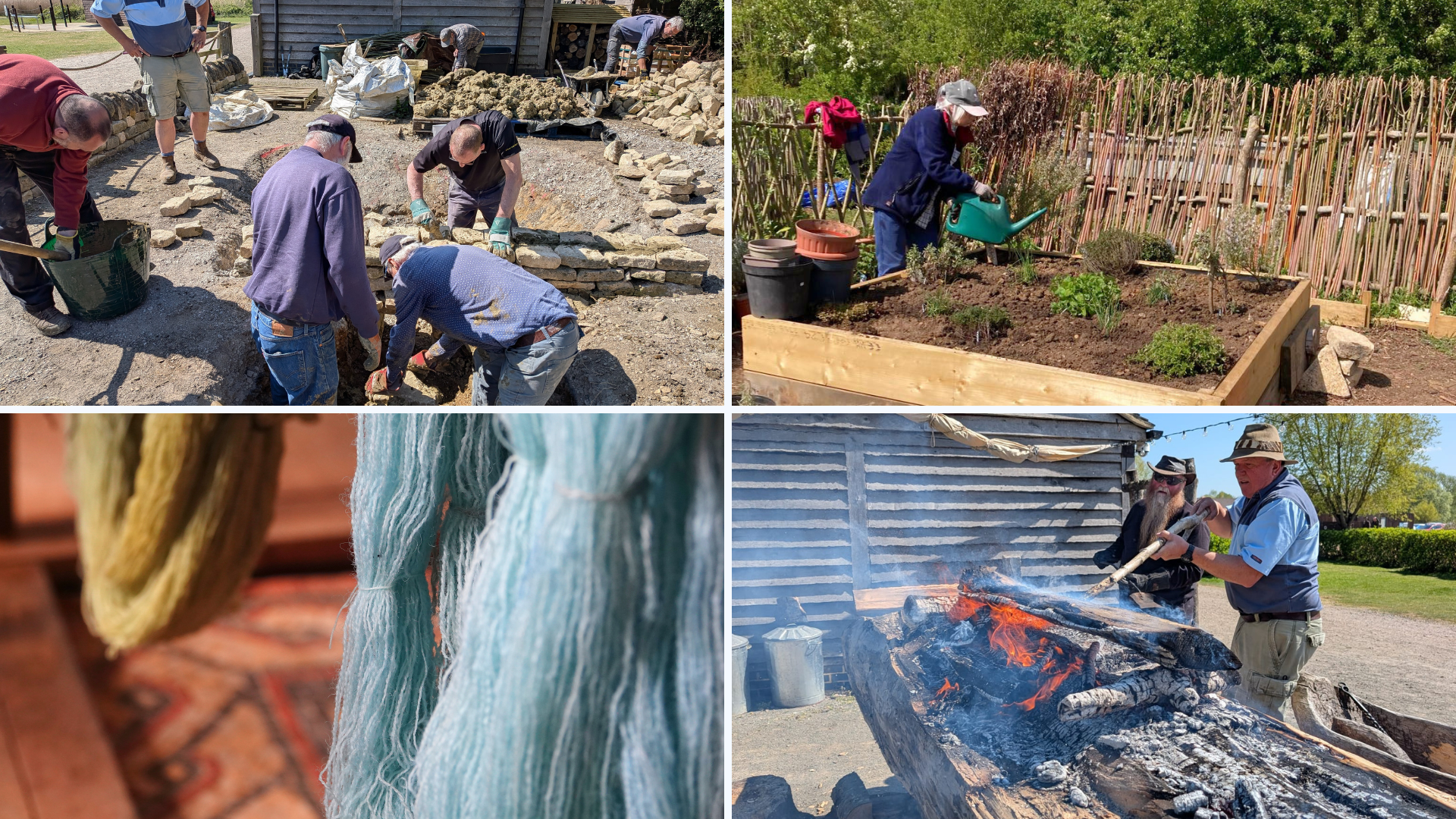
For many weeks, prep work here focused on digging out what would become the stoke pit and kiln – not the most glamorous stage, but an essential one.
Things have now moved up a gear. The team has been processing clay for the structure (a gloriously messy job, and judging by the smiles, thoroughly enjoyed!), and volunteers, alongside archaeologist Derek Roberts, have begun constructing the kiln walls. You can really start to see the form emerging, with the stoke hole taking shape.
There’s also been plenty happening behind the scenes, with wood being collected and cut in preparation for the first firing later this year. With firings expected to last anywhere between 24–48 hours, it’s safe to say we’ll need quite the woodpile.
Meanwhile, the potters at Woodnewton Workshops have been experimenting with the same clay, producing a range of replica vessels ready for their moment in the kiln.
The kiln itself is based on a real example uncovered at Stibbington, near Peterborough. This area once supported a cluster of Roman kilns supplying the nearby settlement of Durobrivae (modern-day Water Newton), active from the mid-2nd to 4th centuries CE.
Roman Garden
The Roman Garden is really beginning to come into its own.
The raised beds are now in place and already starting to fill with plants, bringing the space to life in a very tangible (and very green) way. Volunteers have worked incredibly hard to get to this stage – shifting soil, levelling ground, and laying the foundations for what will become a truly beautiful space.
There’s also been some wonderfully creative touches, including handcrafted hazel plant markers made by one of our volunteers, which add both character and a real sense of care to the beds.
It’s one of those spaces where you can really see how the physical effort pays off – transforming hard work into something calm, sensory, and quietly stunning. And with plans for mosaics and painted frescoes still to come, it’s only going to get better.
Textiles and Dyes
Sunshine and blue skies have provided the perfect conditions for natural dyeing – and the textiles group have been making the most of it.
The Northants Guild of Spinners, Weavers and Dyers have been busy preparing and dyeing a range of materials, including wool, linen and silk. These fibres became much more widely available in Britain during the Roman period, opening up new possibilities for both clothing and colour.
While certain shades would still have been reserved for wealthier or higher-status individuals, the increased availability of materials, spices, and natural dyes would have had a noticeable impact on everyday life in Roman Britain too.
And on a practical note – it also makes for a pretty spectacular sight during dyeing sessions, with a full rainbow of colours gradually appearing across the drying lines.
Alongside this, the group have been working on their “inspired by” projects – creating textile pieces influenced by the Roman era at Stanwick Lakes and across the Nene Valley. These have been a chance to take everything they’ve been learning and apply it creatively, resulting in some really beautiful and thoughtful pieces, a selection of which we recently shared on social media.
The Jetty Build & Big Bronze Age Boat Build (Part 2)
It’s been all hands on deck (or rather, log) for the Bronze Age boat build.
Over the past few weeks, volunteers have quite literally been chipping away at the large log, slowly hollowing it out using replica Bronze Age tools.
Alongside this, work has continued on shaping the upright timbers that will form the jetty, and this is continuing to take shape. This construct will offer a location to submerge the boats periodically, as a way to preserve them for longer – a technique believed to have possibly been used during the Bronze Age, as noted in the Must Farm archaeological reporting.
This week brought a bit of experimentation too. Faced with some particularly stubborn knots in the wood, the team turned to fire-setting – a technique used in prehistory. By carefully burning targeted areas of the log, the wood becomes charred and much easier to scrape away.
It’s a slow, controlled process, but incredibly effective – and one we first experimented with in an earlier project. Safe to say, we’re still a little amazed by just how well it works.
Villa Viewpoint
While construction at the Villa Viewpoint is set to begin later this year, there’s been plenty of quiet progress behind the scenes.
Reclaimed tiles and stone continue to be gathered, and work is now underway preparing and cutting these materials ready for mosaic creation. These pieces will form part of a reflective and immersive space – one that invites visitors to pause, look out across the landscape, and imagine what once stood here.
Join Us!
If you’re planning a visit, some of the best times to see these projects in action are during our Heritage Build Weekends. The next dates are:
30th & 31st May
4th & 5th July
1st & 2nd August
Find our more here: https://stanwicklakes.org.uk/events/heritage-build-weekends-2026/2026-05-30/
Events – save the dates!
- Festival of Archaeology (18th July – 2nd August) – our August Heritage Build Weekend falls during this national celebration of archaeology. We’ll be running activities alongside the build weekend; keep an eye on our website for details. You can also explore the full national festival programme at www.archaeologyuk.org/festival.
- 20th September – Heritage Open Days – we’re taking part in England’s largest festival of history and culture (11-20 September). We’ve already registered our event; find us directly on the Heritage Open Days website.
These weekends are a brilliant opportunity to see the spaces come to life, chat with volunteers, and get a closer look at the skills and techniques being used across the site.
And if watching sparks a bit of curiosity… we’re always happy to welcome new volunteers. Whether you fancy getting hands-on or just want to find out more, it’s a great way to be part of something a little bit special.
To find out more, please visit our volunteering section on our website.